CORPORATE ACCOUNTABILITY IN PLASTICS POLLUTION
By: C-Help Team
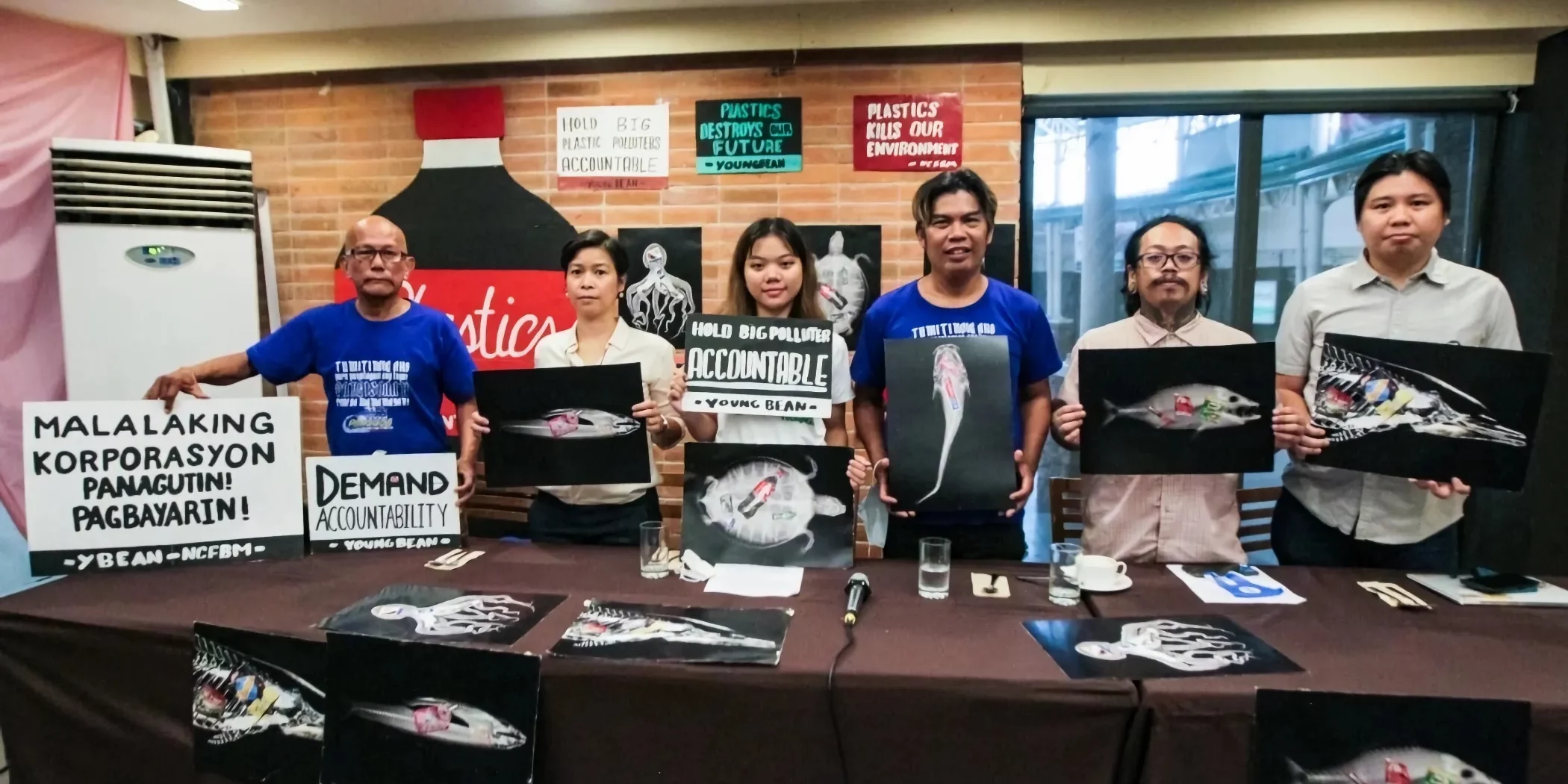
In partnership with environmental groups and people’s movements, C‑Help seeks to hold major corporations accountable for plastic pollution in the Philippines. The advocacy to seek corporate accountability by preparing a complaint against the corporations arises from the urgent need to confront the systemic problem of single‑use plastic sachets. These products, often marketed as convenient and “recyclable,” in reality persist in the environment, overwhelm waste systems, and mislead consumers about their true impact.
The problem is not simply improper disposal—it reflects a business model built on mass production of inherently non‑environmentally acceptable packaging. Sachets are multi‑layered, non‑recyclable, and inevitably bypass recovery systems, making pollution a certainty under Philippine environmental laws.
This advocacy therefore aims to demand responsibility for unchecked plastic production and misleading recyclability claims. By preparing the complaint, the effort seeks to establish accountability under existing statutes while advancing transparency, stronger regulation, and protection for present and future generations. It forms part of a broader strategy combining litigation, negotiation, policy advocacy, and public awareness to challenge corporate greenwashing and promote genuine sustainability.
The Philippine Consumers Case against Coca Cola, Pepsi, Nestle, Colgate Palmolive, and Universal Robina Corporation pending before the Court of Appeals
The Philippine Consumers Case against major corporations—including Coca-Cola, Pepsi, Nestlé, Unilever, Colgate-Palmolive, and Universal Robina Corporation—focuses on corporate accountability for plastic pollution. The case challenges the truthfulness of “recyclable” labels on plastic packaging, arguing that they are misleading under the Consumer Act of the Philippines. Initiated in 2023 as an administrative complaint with the Department of Trade and Industry, it was elevated to the Court of Appeals in 2025, marking a significant milestone. The corporations uniformly sought dismissal, but the case continues as the country’s only pending litigation directly confronting corporate greenwashing and false advertising, positioning consumer rights and environmental protection as a unified legal front.
Related Links:
- https://world.350.org/philippines/press-release/hold-plastic-polluters-accountable/?r=PH&c=AS
- https://world.350.org/philippines/press-release/coca-cola-5-other-oceans-polluters-in-hot-water-for-false-recyclable-plastic-ads/?r=PH&c=AS
- https://www.greenpeace.org/philippines/press/11021/brand-audit-2021-greenpeace-ph-urges-govt-scrutinize-top-plastic-polluters-false-sustainability/
- https://www.peoplesdomain.net/pg-dti-fteb-packaging/
- https://www.breakfreefromplastic.org/2023/06/02/philippine-fisherfolk-support-plastics-treaty/
- https://www.packaginginsights.com/news/pg-settles-filipino-consumer-complaint-alleging-false-recyclability-labels-on-pack.html
Negotiation with Proctor & Gamble (P&G)
The Dialogue with Procter & Gamble represents a shift from litigation toward direct corporate engagement. Consumer complainants, supported by C-Help, Break Free from Plastic, and Greenpeace Philippines, are negotiating with the company to secure commitments on reforming its recycling ads and labels, alternative modes of product delivery such as reuse and refill, packaging redesign and reduction in plastic packaging and production. .
The settlement between Filipino consumers and Procter & Gamble (P&G) marks a pivotal step in corporate accountability on environmental labeling. Originating from the Andrade, et al. v. Coca-Cola, et al. complaint filed in 2023, it challenged misleading “recyclable” claims on plastic packaging, exposing how most plastics are technically or economically unfeasible to recycle and often end up in landfills or incinerators.
Unlike other corporations resisting the case, P&G entered into open negotiations with consumers, C-Help, and environmental groups. These dialogues from 2024 to 2026 demonstrated meaningful progress and set a precedent for constructive corporate–consumer engagement.
Beyond symbolic gestures, the settlement’s real impact lies in establishing a new expectation of transparency and accountability. It highlights the urgent need for government-mandated standards on recycling claims and reflects a broader global shift toward honest sustainability communication. This agreement underscores that protecting consumers and the environment requires both corporate responsibility and stronger regulatory oversight.
Related Links:
- P&G settles Filipino consumer complaint alleging “false” recyclability labels on-pack
- Consumer goods firm reaches agreement over false recycling claim in the Philippines
- P&G settles plastics recyclability claims lawsuit in the Philippines
- P&G signs mediation agreement on false advertising
- Coca-Cola agrees to revise plastic recycling claims across Europe