
ASEAN drowning in plastic: Why corporate giant leaders must be part of the solution
By: C-Help Team
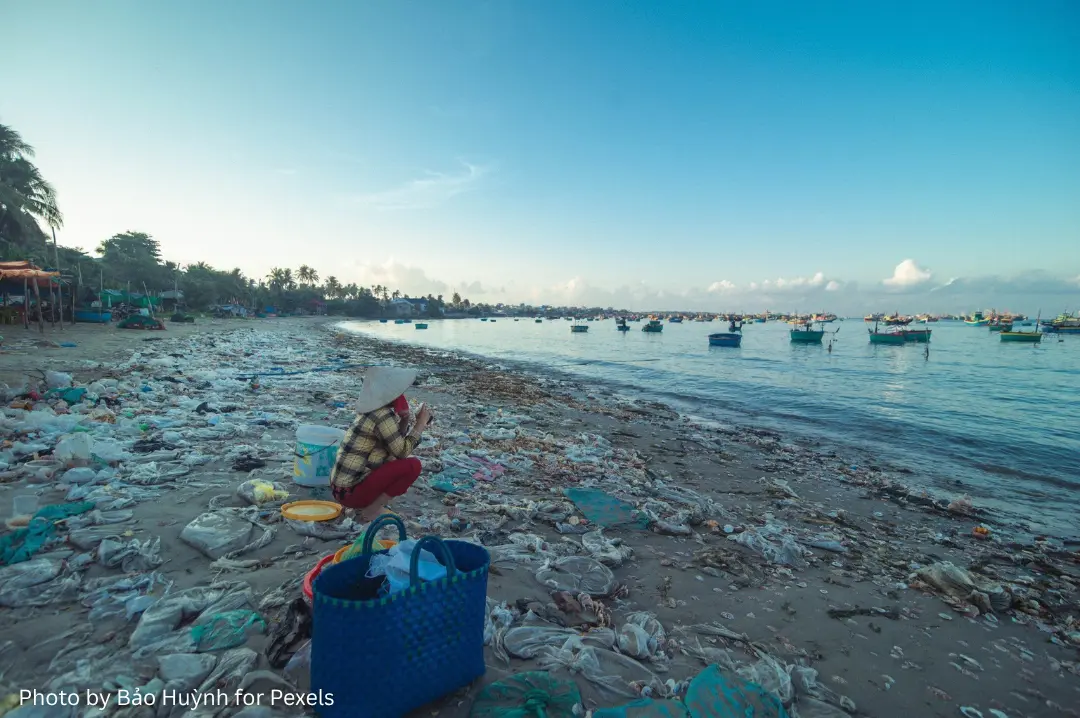
Take a stroll along any stunning beach in Southeast Asia, and you’ll likely spot more than just palm trees and seashells—you’ll see vast stretches of shoreline littered with colorful, single-use plastic sachets and bottles. The Association of Southeast Asian Nations (ASEAN) is facing a full-blown plastic pollution nightmare across its land and marine ecosystems. Across six ASEAN member states—Indonesia, the Philippines, Vietnam, Thailand, Malaysia, and Myanmar—multinational corporations flood local markets with single-use packaging and unrecyclable materials, driving a staggering generation of over 31 million tonnes of plastic waste annually. With millions of tonnes leaking directly into marine and terrestrial environments, studies from the World Bank and UNEP highlight that the region accounts for over half of global ocean plastic input—severely threatening biodiversity, coastal livelihoods, and public health. While everyday consumers are often advised to carry canvas bags and refuse straws, individual choices cannot stem this tide: the crisis is driven by a massive, system-wide flood of single-use corporate packaging.
At the same time, mounting evidence across the region indicates that moving away from plastic is becoming a strategic business necessity. This shift is propelled by evolving consumer preferences, impending regulatory mandates, and environmental data demonstrating that only about 9% of global plastic waste is successfully recycled.
The sachet trap and microplastics
Unlike natural waste, plastic doesn’t simply disappear. Instead, it breaks down into tiny, invisible fragments known as microplastics. These microscopic bits make their way into our rivers, oceans, marine life, and even our drinking water and food.
According to the United Nations Environment Programme (UNEP) and recent environmental research, millions of tonnes of plastic leak into the marine environment every year. In the Philippines alone, over 164 million plastic sachets, 48 million shopping bags, and 45 million thin-film bags are used every single day. Designed for quick convenience, these multi-layer laminates resist natural degradation and persist in ecosystems for centuries.
Who is producing these single use plastic packagings?
For years, citizen scientists and volunteers with the Break Free From Plastic (BFFP) movement have conducted extensive brand audits across India, Indonesia, the Philippines, Vietnam, and dozens of other nations. Based on BFFP brand audit reports (2018–2021), by analyzing hundreds of thousands of discarded waste items, they identified the primary parent companies responsible for this environmental footprint:
- Unilever (“The Sachet King”): Consistently ranked at or near the top of global and regional sachet audit lists. Selling roughly 53 billion plastic sachets annually (about 1,700 every second!), Unilever floods developing markets with unrecyclable multi-layer sachets for brands like Sunsilk, Knorr, Surf, and Dove. Its global plastic packaging footprint reached a staggering 685,000 to 713,000 metric tonnes per year in recent reporting.
- The Coca-Cola Company: Named the #1 global plastic polluter in consecutive Break Free From Plastic audits, generating around 200,000 metric tons of plastic packaging annually in developing markets alone and accounting for up to 11% of all branded plastic waste found in global audits.
- PepsiCo: Consistently holding a top spot among global polluters, with a massive plastic footprint exceeding 137,000 tonnes annually and millions of single-use PET bottles and flexible snack wrappers ending up in waterways.
- Nestlé: Another regular fixture in top-polluter lists, generating over 35,000 metric tons of plastic pollution footprint in the Philippines alone.
Other major plastic contributors in the ASEAN region, according to the same BFFP reports, include companies like Procter & Gamble (714,000 tonnes globally), Colgate-Palmolive (275,000+ tonnes), Wings, Mayora Indah, and Universal Robina Corporation (URC).
Peer-reviewed research in Science Advances highlights a direct 1:1 linear relationship: for every 1% increase in a company’s plastic production, there is a corresponding 1% increase in environmental plastic pollution. Just 56 global companies are responsible for over half of all branded plastic waste found across the globe!
Efforts are being made to address plastic pollution in the region. However, unless plastic packaging by big corporations is not challenged, the efforts may be in vain.
The ASEAN Declaration on Environmental Rights and the Philippine Roadmap
Addressing this corporate production footprint requires robust regional governance. The adoption of the ASEAN Declaration on the Right to a Safe, Clean, Healthy, and Sustainable Environment (ADER) represents a pivotal shift toward a human rights-based approach to environmental protection across Southeast Asia. By explicitly affirming the right to a clean and healthy environment, the ADER provides a normative and procedural foundation to hold corporate polluters accountable. Regional human rights mechanisms, particularly the Southeast Asia National Human Rights Institutions Forum (SEANF) and the ASEAN Intergovernmental Commission on Human Rights (AICHR), offer a critical avenue to bridge national legal gaps through cross-border cooperation and binding transnational inquiry procedures. Because traditional municipal and state regulators are often constrained by territorial boundaries, an inter-National Human Rights Institution (inter-NHRI) framework under SEANF can directly investigate the transboundary footprint of multinational packaging giants—linking unrecyclable product designs and supply-chain choices directly to systemic human rights violations.
Leveraging this regional human rights architecture enables states to establish harmonized Extended Producer Responsibility (EPR) mandates and enforce strict due diligence across global supply chains. Furthermore, this rights-based paradigm provides a crucial safeguard against corporate greenwashing and false solutions. Rather than allowing companies to rely on misleading recycling claims, carbon offsets, or high-emission waste-to-energy (WTE) incineration technologies—which generate toxic air pollution and undermine circular economy goals—human rights frameworks demand actual upstream reductions in virgin plastic production. Integrating these mechanisms into the Regional Plan of Action (RPA) ensures that regional governance moves beyond voluntary commitments toward enforceable corporate accountability and genuine environmental protection.
At the national level, policy frameworks are similarly evolving to address plastic waste. The Philippine National Plastic Action Roadmap 2026–2040 establishes an ambitious strategy to curb plastic waste across the country, setting a target to reduce plastic pollution by 85% by 2040. The roadmap outlines key initiatives including scaling up waste collection systems, promoting circular economy practices, and enforcing Extended Producer Responsibility (EPR) mandates. However, meeting these target goals depends heavily on curbing plastic production directly at the source. Merely relying on downstream solutions like recycling and waste management is insufficient to handle the overwhelming volume of single-use packaging. Upstream reduction—such as banning non-essential single-use plastics and requiring corporations to adopt reusable delivery systems—is essential to prevent pollution before it enters the ecosystem.
People taking action
Complementing these regional and national regulatory structures, affected communities are actively driving enforcement. For decades, corporate marketing campaigns framed plastic waste as a consumer discipline problem—suggesting that if individuals simply stopped littering, oceans would remain clean. However, communities, waste workers, and fisherfolk are pushing back against this narrative. In places like Manila Bay, fisherfolk face severe income loss when plastic debris entangles propellers and destroys fishing nets. Meanwhile, waste workers handle toxic, low-value sachets that municipal systems simply cannot recycle.
Real change is beginning to take shape through powerful, grassroots-led legal actions to expose the falsity of corporate plastic recyclability claims and demand structural accountability for the plastic crisis. Coalitions of fisherfolk (PANGISDA), waste workers (PNWWA), youth (YoungBEAN), and women’s groups (KABARO) are driving landmark cases to challenge the root causes of plastic pollution. In Andrade, et al. v. Coca-Cola, et al., 32 consumers and advocates brought a consumer-protection action challenging multinational and domestic corporations for deceptive greenwashing and misleading “100% recyclable” claims on single-use bottles and packaging—demanding transparency regarding the real-world economic and technical limitations of plastic recycling in local systems. Building on this momentum, grassroots groups filed an administrative pollution complaint before the DENR Pollution Adjudication Board in PANGISDA, et al. v. Unilever, et al., seeking to hold corporate giants accountable for flooding waterways with billions of non-recyclable multi-layer plastic sachets that cause severe, systemic environmental, health, and livelihood harm to coastal communities and waste frontliners. Together, these actions represent a pivotal shift by affected communities to demand legally enforceable corporate responsibility, virgin plastic reductions, and true environmental justice.
It’s time to move beyond voluntary corporate promises and greenwashing schemes. To protect our oceans, public health, and human rights, the world must demand that multinational corporations drastically cut virgin plastic production, eliminate single-use sachets, and switch to sustainable, reusable packaging solutions.
Why corporate leaders must be part of the solution
To turn the tide on Southeast Asia’s plastic crisis, multinational corporate leaders must move beyond voluntary pledges and commit to systemic, structural changes in how products are packaged and delivered. Industry leaders can drive genuine transformation by phasing out single-use multi-layer sachets, capping virgin plastic production, and investing heavily in standardized reuse and refill models.
Beyond moral and regulatory imperatives, transitioning away from single-use plastics offers significant long-term strategic and financial advantages for corporations operating across the ASEAN region.
Global environmental data from the OECD and civil society groups such as Greenpeace confirm that recycling alone cannot resolve the crisis as virgin plastic production continues to outpace waste management capacity.
Proactively adopting plastic-free alternatives insulates companies from escalating packaging taxes, upcoming Extended Producer Responsibility (EPR) penalties, and costly consumer-protection litigation.
Furthermore, eliminating single-use materials lowers corporate operational expenses and raw material procurement costs over time, directly reducing greenhouse gas emissions across the value chain.
Studies show that relying solely on downstream recycling cannot keep pace with exponential virgin plastic production, reinforcing the necessity for upstream reduction. Recent consumer research indicates growing environmental awareness in developing markets, where eco-conscious buyers actively prefer brands offering sustainable packaging. Proven corporate transitions—such as major hospitality chains in the Philippines shifting to refillable dispensers—demonstrate that plastic-free delivery systems are both scalable and profitable.
As governments enforce stricter environmental policies—such as the Philippine Plastic Action Roadmap and ASEAN human rights frameworks—embracing circular packaging future-proofs corporate growth against volatile petrochemical prices and brand risks, ensuring a resilient, sustainable market presence.