
“A Little Pack Goes a Long Way… in Waste”
By: C-Help Team
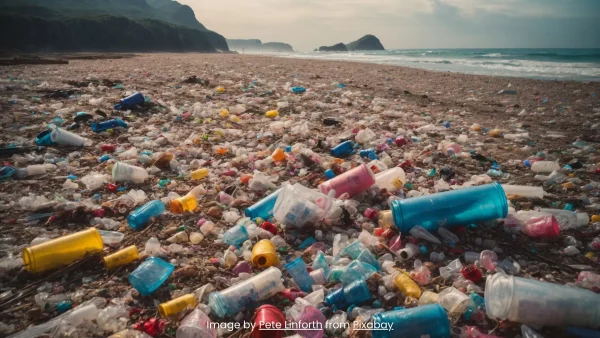
“Isang sachet lang po!” — the familiar chorus of daily life in the Philippines. Tingi culture has always been about resilience: buying just enough for today, stretching every peso, and making do with what’s available. But corporations saw this rhythm and turned it into a business empire—the sachet economy. And now? Our rivers, streets, and oceans are drowning in plastic confetti we never asked for.
A Plot Twist in Accountability
Enter the heroes: Pagkakaisa ng Samahan ng Mangingisda-Pilipinas (PANGISDA), Young Bataeños Environmental Advocacy Network (YOUNGBEAN), Kababaihang Bataeño para sa Kalikasan, Karapatan, at Pagbabago (KABARO), and Philippine National Waste Workers Association (PNWWA), all non-profit environmental and community groups, filing a landmark petition against plastic giants like Unilever. Think of it as the sequel to history’s greatest plot twists:
- When we discovered lead in paint wasn’t just decoration but poison.
- When CFCs in aircons weren’t just cool but killing the ozone.
Now, sachets are the villain of the decade—cheap convenience with a hidden cost.
The Hidden “Tax” of Tingi
Sachets look affordable at the sari-sari store, but here’s the trick:
- Per unit, they’re more expensive than bulk packaging.
- Families end up spending more in the long run.
- Corporations laugh all the way to the bank, expanding into vulnerable markets.
And the environment? It pays the biggest price. Sachets clog esteros, flood our cities, and choke our coastlines. As expert Emma Priestland points out, “Sachets are small format packaging that is polluting the environment in enormous numbers. They are clearly a damaging packaging format, however there are easy solutions for companies to avoid them. They are not sold in most of the world, and there is no good reason to continue to sell them.” This highlights how sachets are not only harmful but also unnecessary.”
This reality is not just an abstract concern. It is felt directly by those whose livelihoods depend on the sea. As Ka-Pablo, a fisherfolk, shares: “Sa tagal kong mangingisda, simula ako ay 9 years old, ngayon ay 67 na ako, noon hindi pa problema ang mga plastic at sachet na sumasagabal sa lambat ko kapag ako ay nangingisda, dahil noon, mas madami pa ang isdang nahuhuli kumpara sa plastic. Ngayon, mas marami ang plastik kumpara sa isda.”
Another fisherfolk, Edlyn Rosales, expressed her concern, “Wala kaming mahuling isda o nasisiraan kami ng lambat o propeller ng bangka sa dagat. Hirap po kami umarya ng lambat kasi minsan ang lawak ng kumpol ng mga basurang lumulutang sa dagat. Lalo na ang plastiks at sachets. Wala na ho kaming mahuling isda dahil barado na ng plastik [y]ung lambat. Dahil doon, lumiliit ang aming kita mula sa pangingisda at napapagastos kami sa pagpapagawa ng lambat at pagpapalit propeller.”
Busting the Recycling Myth
We’ve been told: “Don’t worry, just recycle!” But chemical engineer Dr. Jorge Emmanuel drops the mic: recycling alone cannot solve the crisis because “most plastics cannot be recycled”.
This means that the only real solution is to reduce production, especially of single-use plastics like sachets.
That’s why this petition pushes for corporate accountability—forcing companies to clean up their mess and rethink their business models, because the burden of finding solutions should not fall on ordinary citizens solely.
“Bilang isang youth volunteer, iniisip ko kung bakit kami ang nag-iisip ng solution sa problema sa mga plastik at sachets na hindi naman kami ang gumawa. Kami naman ang nagco-consume ng products ng mga respondents kaya dapat may concern din sila sa effect nito sa amin. Hindi lang ung product at packaging ang dapat na iniisip nila.
Naniniwala po ako na ang coastal cleanup ay parang “band-aid solution” lamang. Kung hindi titigil ang mga respondents sa sobrang produksyong ng plastiks at sachets, mananatili ang problema,” Enrique Beren, a youth environmental advocate, said.
This is why the fight goes beyond temporary fixes. It demands systemic change and a vision for a better tomorrow.
Reclaiming Our Future
This fight isn’t just about oceans or garbage dumps. It’s about dignity. It’s about saying:
- Tingi culture can stay, but tingi doesn’t have to mean plastic.
- Imagine refill stations in barangays, cooperatives selling bulk goods at fair prices, and communities freed from the sachet trap.
By challenging the sachet economy, we’re not just rejecting a piece of plastic—we’re demanding a cleaner, fairer Philippines.
Bottom Line: The time for excuses is over. The sachet empire had its run. Now, it’s time for accountability, creativity, and courage. Let’s build a future where our children inherit beaches lined with seashells, not sachets.